
Postural and safety belts: a guide to choosing
The difference between postural support and safety restraint, belt types (chest, abdominal, pelvic), fastenings and criteria for correct, safe use.
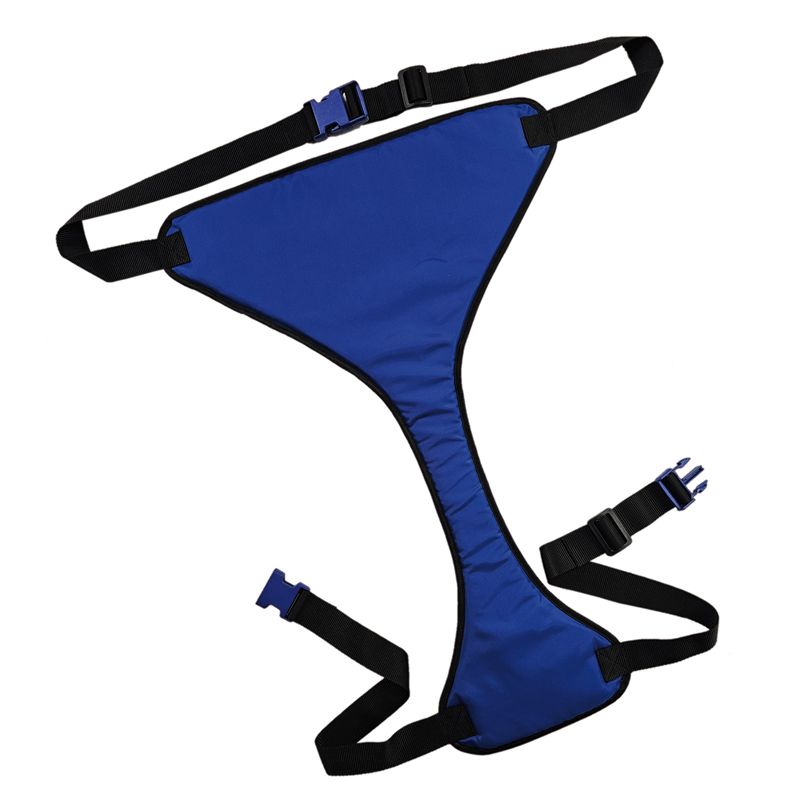
Postural belts are devices that help maintain correct posture on wheelchairs and commode chairs and prevent falls. They must be distinguished from restraint devices, whose use is governed by prescription and facility protocols: understanding the difference is the first step to choosing well.
The three main types
- Chest belt: supports the trunk, indicated when the upper body tends to slide forward.
- Abdominal belt: stabilizes the pelvis at the abdomen, keeping the person in the correct seated position without limiting arm and upper-trunk movement.
- Pelvic belt: acts even more deeply on the pelvis, countering the "sliding" effect typical of those who spend many consecutive hours in a wheelchair.
Fastenings: simple, safety, eyelet tape
- Simple side-release buckle — quick for the carer, indicated for cooperative persons who do not unfasten themselves.
- Push-button safety fastening — requires strong, intentional pressure, reducing both accidental and deliberate opening.
- Eyelet tape with magnetic lock and key — opens only with a dedicated key, for cases where the prescription requires a higher level of safety.
Bed safety belts: when and how to use them
Bed safety belts are intended for non-cooperative patients requiring therapy. Their use must always be prescribed, follow facility protocols, include regular monitoring and last only as long as strictly necessary.
Informational content: adopting restraint devices is a clinical decision that rests with healthcare staff.