
Pressure sore prevention in care homes: equipment and best practices
In residential care facilities, effective pressure sore prevention is one of the main indicators of quality of care.
Achieving concrete results requires perfect synergy between three elements: clear operating protocols, trained staff and suitable, constantly efficient equipment.
Risk assessment on admission
The preventive protocol starts at admission with risk measurement using the Braden or Norton scales. Monitoring this index at fixed intervals, or in case of clinical instability, allows the bed equipment to be promptly adapted. Immediately matching the right aid to the detected risk level is the only way to eliminate the onset of sores.
Bed equipment
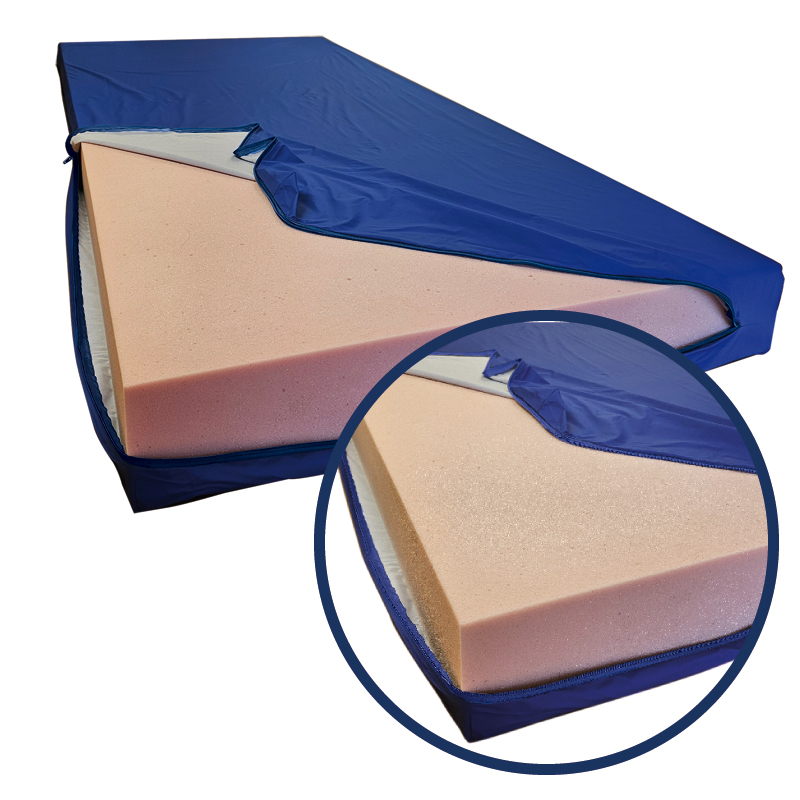
- Certified preventive mattress: Class 1 IM certified anti-decubitus device for maximum safety and skin protection.
- Hygienic waterproof covers: rubber-coated mattress cover and pillowcase acting as a total barrier against liquids, allowing ultra-fast sanitization between guests.
- Impact protection for bed rails: padded side guards designed to eliminate the risk of trauma against the rigid parts of the bed.
- Complete positioning kit: a range of aids (universal, roller and half-moon cushions, heel cups) essential for managing pressure-relief therapy and posture changes.
Posture changes and position stability
Scheduled posture changes at regular intervals are the core of any preventive strategy. To optimize this process and reduce the physical load on operators, micropearl positioning cushions are strategic: thanks to their ability to mould and hold their shape, they stabilize the guest in 30° lateral decubitus, maintain limb abduction or safely isolate the heels, preventing incorrect postures.
Hygiene and maintenance of devices
Removable rubber-coated fabric covers allow frequent washing without degrading the padding; spare covers available for every model extend device life and maintain hygiene standards between guest rotations.
Technical note: these operating guidelines complement and do not replace internal ward protocols and the clinical assessments of the facility's healthcare team.