
How to prevent pressure sores: a practical guide
Pressure sores are localized damage to the skin and underlying tissue. Fortunately, in most cases they can be prevented.
Pressure sores arise from prolonged pressure — often aggravated by friction and moisture — which presses the skin against bony prominences. They particularly affect people confined to bed, in wheelchairs or with severe mobility limitations.
The most at-risk areas
- Lying on the back (supine): sacrum, heels, elbows and back of the head.
- Lying on the side (lateral): hip (trochanter), knees and ankles.
- Seated: ischia and coccyx.
Knowing these body maps is essential in order to monitor them every day.
The four pillars of prevention
1. Repositioning and stabilization in bed
Changing body position at regular intervals is the first rule for relieving tissue. Specific positioning cushions (roller, half-moon, lateral or abductor) keep the patient stable and prevent sliding back onto at-risk areas. Here, polystyrene micropearls are the material of choice: inside positioning cushions (removable-cover or classic versions), they mould the support perfectly around the bedridden patient's body, stabilizing posture in bed.
2. Pressure redistribution with cushions and mattresses
Dedicated anti-decubitus surfaces are essential to reduce body weight forces on the bones. Siliconized hollow fiber offers lightness and breathability for early-stage prevention, while high-density viscoelastic (memory) foam distributes the load evenly for those who sit for many hours.
3. Skin care and microclimate control
Clean, moisturized, dry skin is far more resistant. To simplify hygiene and avoid maceration damage caused by moisture, choose aids with breathable fabric covers, ideal for quick sanitization at home or in a facility.
4. Daily skin inspection
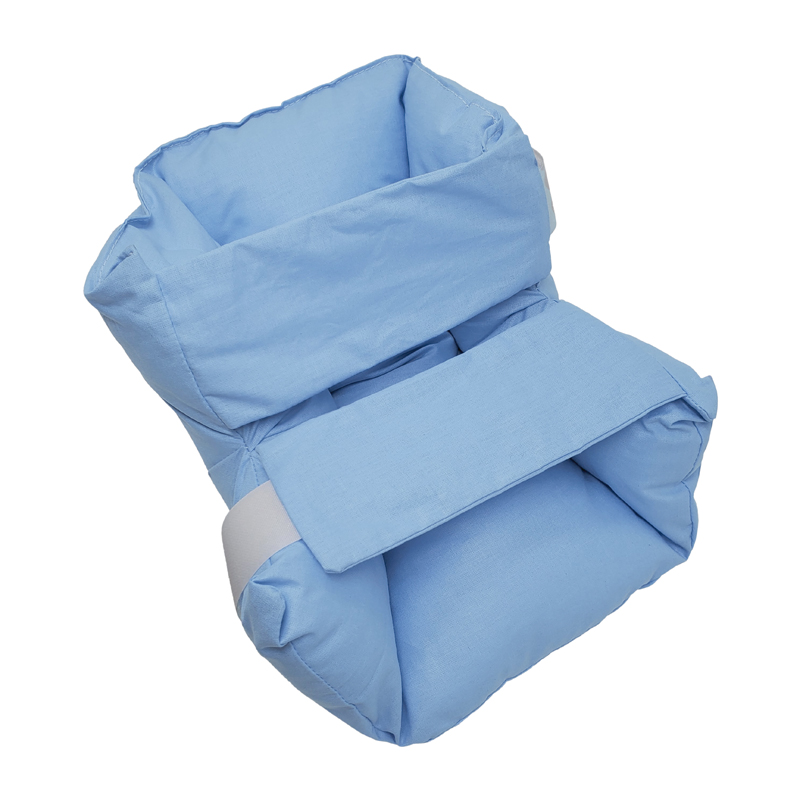
Redness that does not fade when lightly pressed with a finger is the first warning sign. Act immediately by isolating the area from load, for example with central-hole cushions or protective heel cups.
Organizing prevention: where to start?
No device can replace human attention and posture changes, but the right aids make daily care sustainable and safe. A basic preventive kit should include:
- An anti-decubitus mattress or overlay for the bed.
- A dedicated seat cushion for the wheelchair or armchair.
- Protective heel cups for the feet.
- At least one micropearl positioning cushion to stabilize posture in bed.
Our team is available to help you select the combination of aids best suited to each patient.
For professionals (orthopaedic shops, medical supply stores, distributors): the reserved price list with the full range of sizes, variants and spare covers is available on request.
Note: this guide is for information purposes only. Always refer to a doctor or qualified healthcare staff for the choice and configuration of medical aids.